
November 16, 2026
Our quarterly SaaS Valuation Insights report focuses on the TLCF SaaS Index (“TSI”), offering in-depth analysis of its constituents, valuation and M&A trends, as well as insights into the broader European SaaS landscape.
TSI distinguishes itself from other adjacent indices in terms of constituent characteristics and size. Comprising predominantly Nordic and European small to mid-sized public SaaS companies, our index includes 109 companies, with 44% headquartered in the Nordics, 23% in other parts of Europe, only 26% in the United States, and roughly 7% in other global markets. Notably, our index purposefully excludes large-cap SaaS companies.
We firmly believe that our proprietary index serves as an effective valuation benchmark for small and mid-sized SaaS firms, which are the typical transactional focus within our core European markets.
Report highlights
Valuations rebounded as near-term AI disruption fears eased:
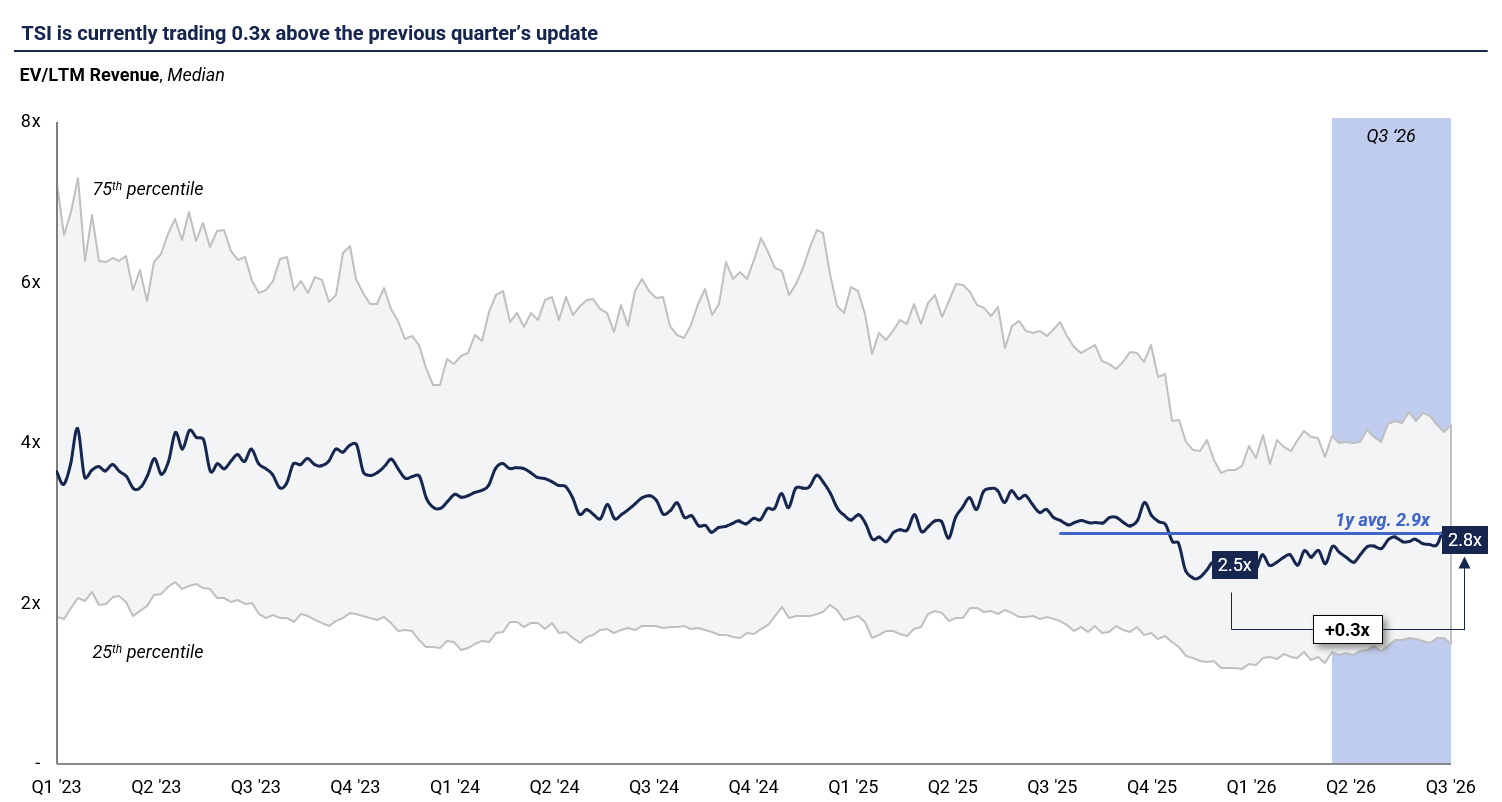
The TSI gained 10% during the quarter, outperforming the STOXX Europe 600 Technology Index, as strong earnings and upward guidance revisions from major SaaS vendors helped alleviate near-term concerns over AI-driven disruption across the broader software industry. The median EV/LTM revenue multiple recovered to 2.8x from 2.5x, while the median NTM multiple increased to 2.6x, supported by an improvement in the median NTM Rule of 40 to 34%.
Despite the rebound, the TSI remains 5% below its level a year ago. SaaS valuation dispersion has narrowed considerably since the beginning of 2025, with valuation percentiles converging and the majority of companies now trading within a relatively tight range of 2–5x EV/LTM revenue.
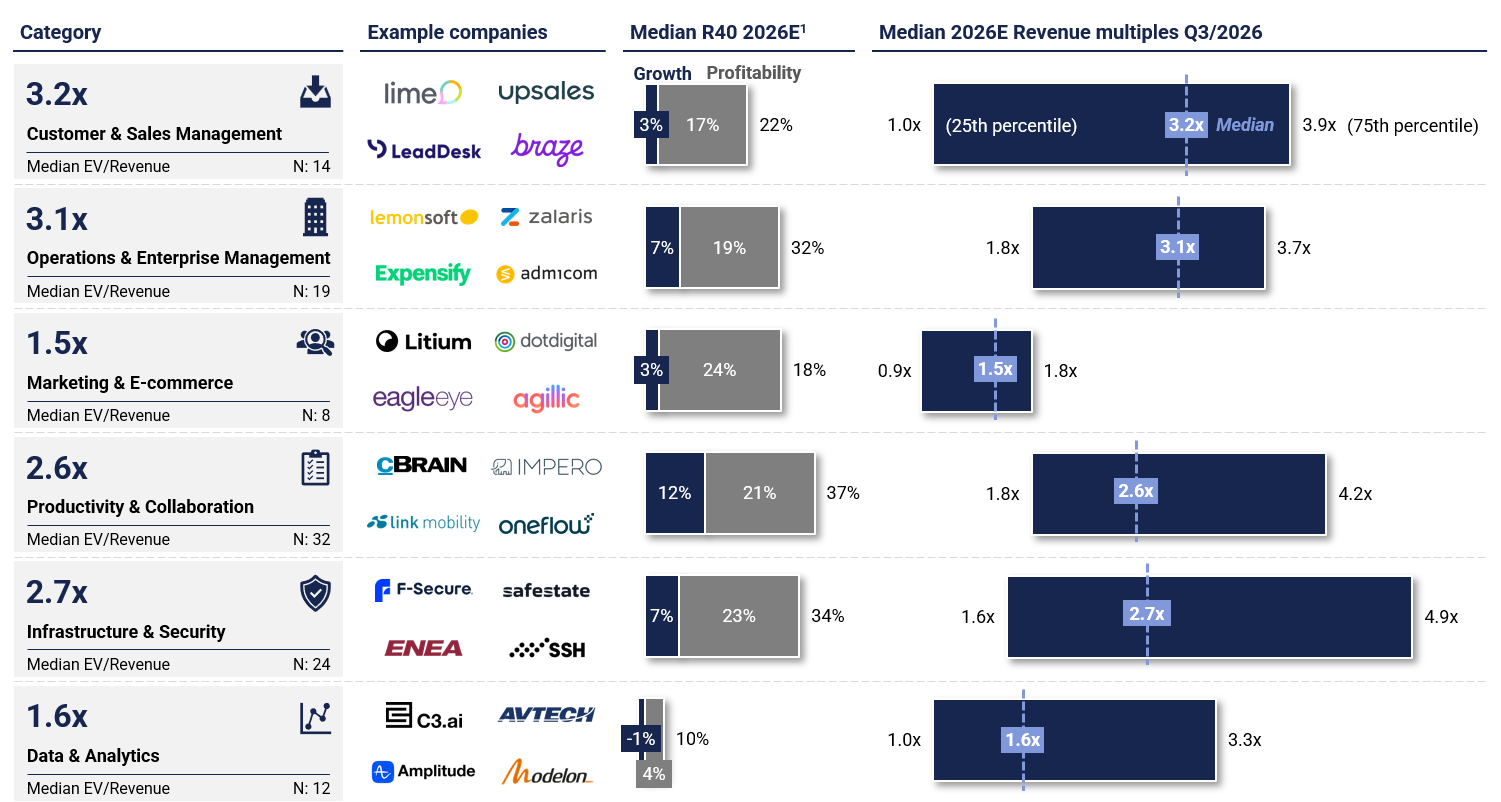
Multiples rose across all categories: The top quartile re-rated to 3.8x EV/2026E revenue, up from 3.3x in the previous quarter, with median valuations improving across all categories. The strongest gains were recorded in Customer & Sales Management, where the median multiple increased to 3.2x from 2.2x, and Infrastructure & Security, which re-rated to 2.7x from 1.8x. Other categories recorded more modest increases of 0.1–0.3x. The re-rating in Infrastructure & Security is particularly noteworthy given the category’s broad representation in the index, comprising 24 companies.
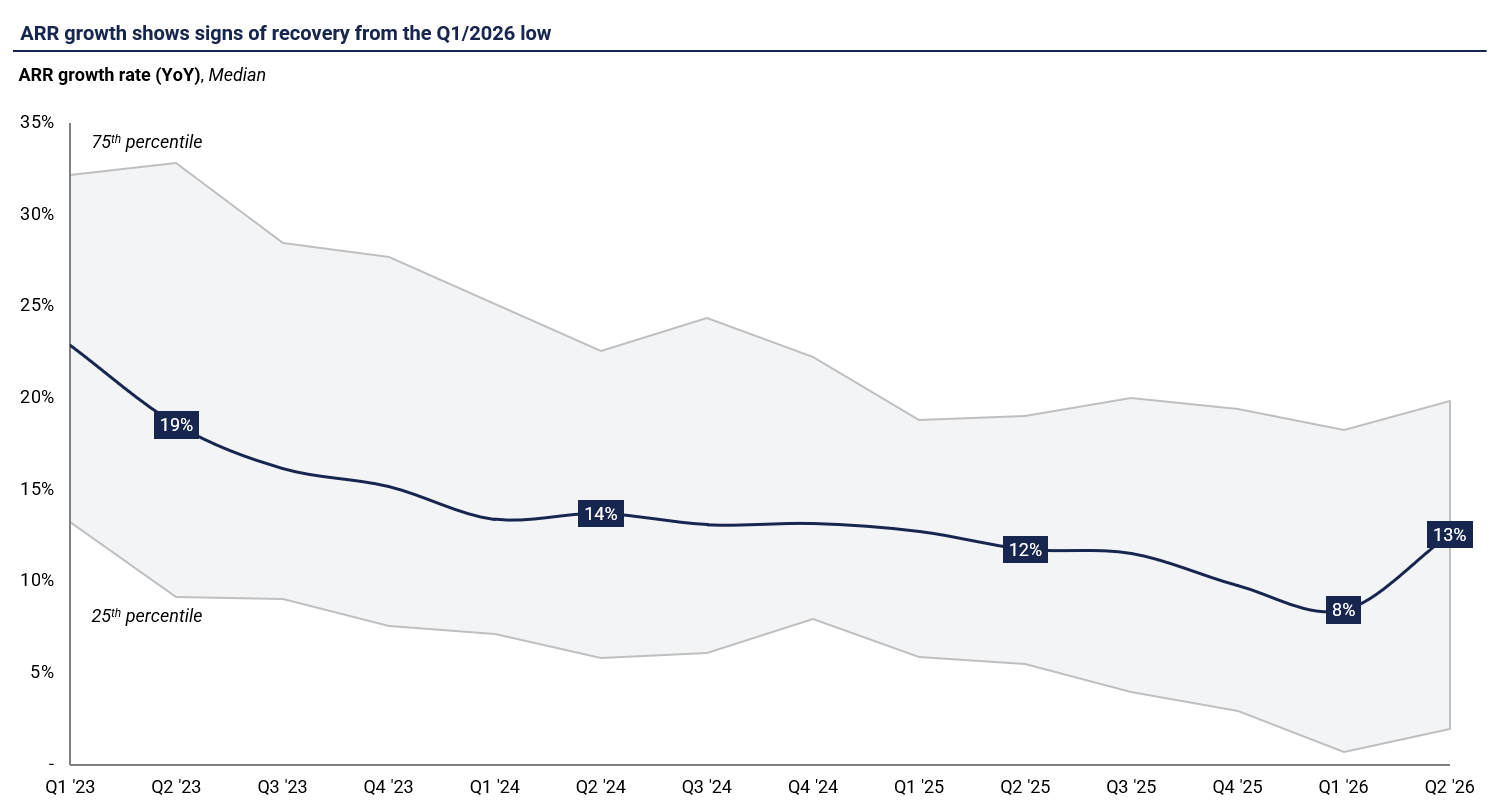
Median ARR growth rebounds notably, breaking a multi-quarter downtrend: Median ARR growth rebounded to 13% in Q2 ‘26 from 8% in the previous update, marking the first meaningful improvement in several quarters. While encouraging, a single quarter of stronger growth does not yet signal a sustained recovery, particularly amid ongoing structural shifts across the SaaS industry, including deteriorating net revenue retention (NRR) and mounting pricing pressure as AI-enabled software development gradually strengthens customers’ bargaining power relative to vendors.
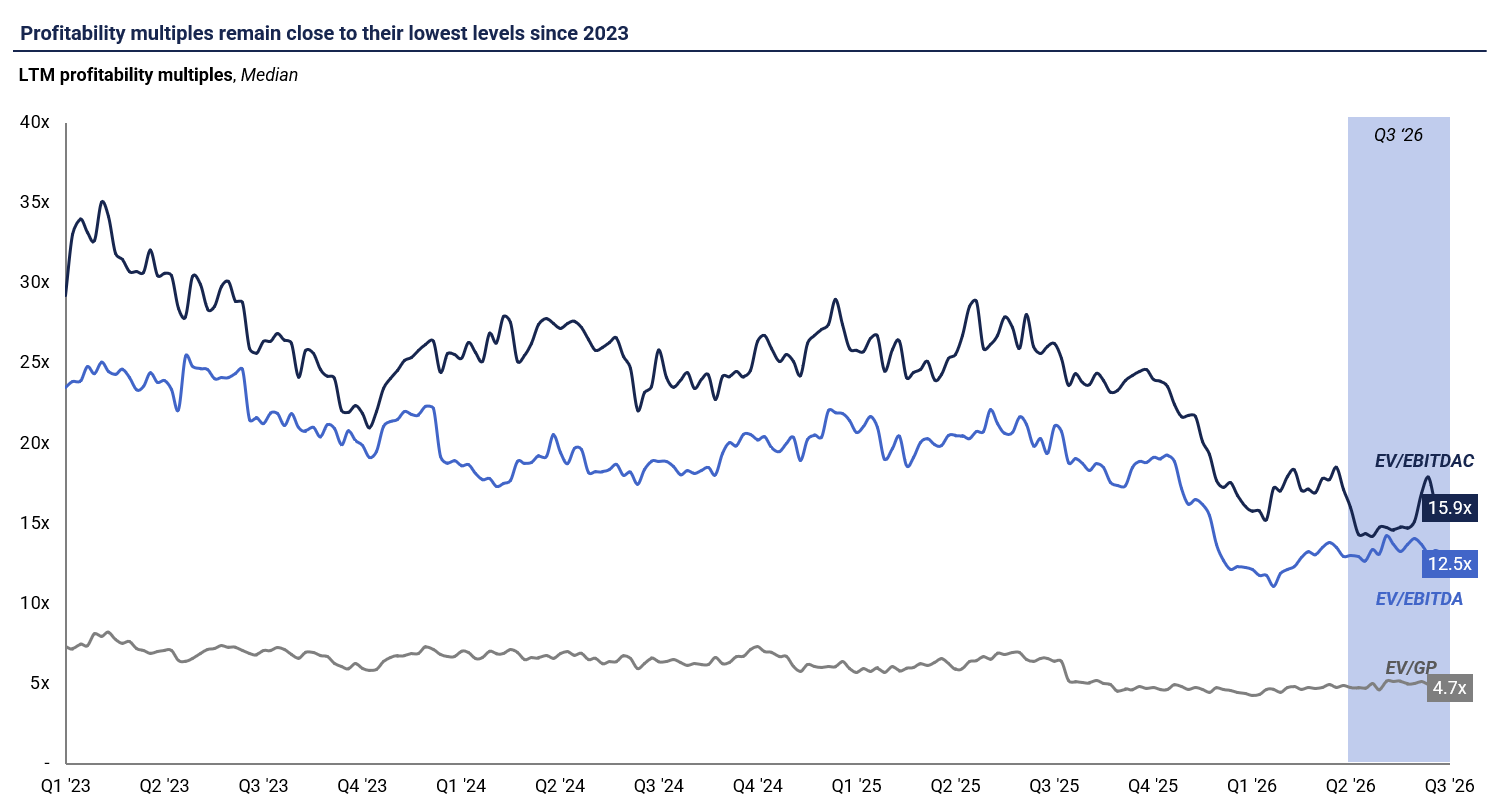
Profitability multiples traded sideways in Q3 ‘26: Profitability-based valuation multiples remained broadly stable in Q3, with EV/EBITDAC at 15.9x and EV/EBITDA at 12.5x, compared with 16.0x and 13.0x, respectively, in Q2.
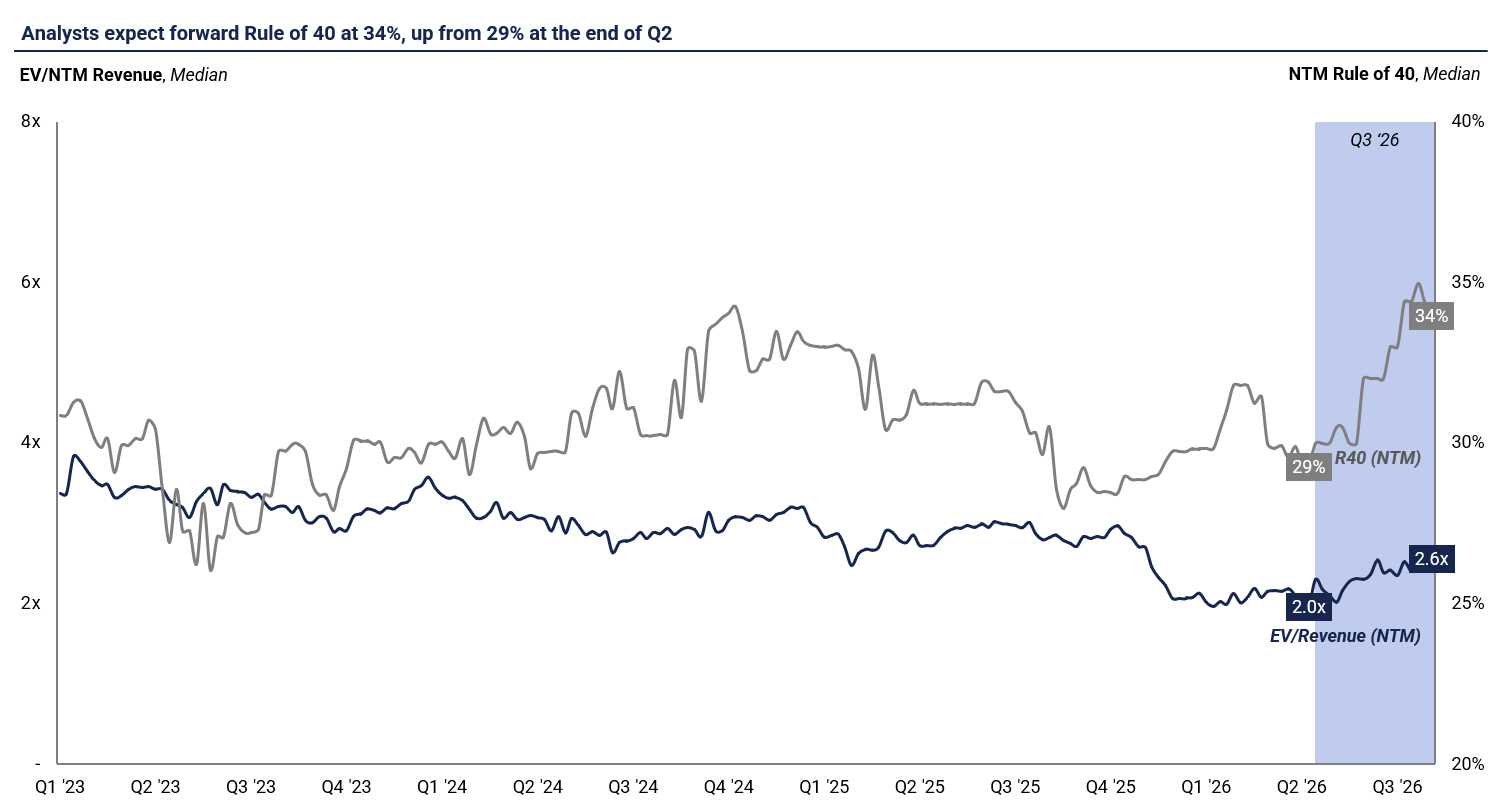
Valuations edged higher alongside an optimistic Rule of 40 outlook: The median EV/NTM revenue multiple increased to 2.6x, while the median NTM Rule of 40 improved to 34% from 29% in the previous quarter, following several quarters during which the two metrics had largely decoupled and moved in opposite directions. Analysts’ forward-looking expectations remain notably optimistic and should be interpreted with caution, as realised LTM Rule of 40 figures have consistently fallen well short of forecasts, typically ranging between 10–15% rather than the projected 30–35%.
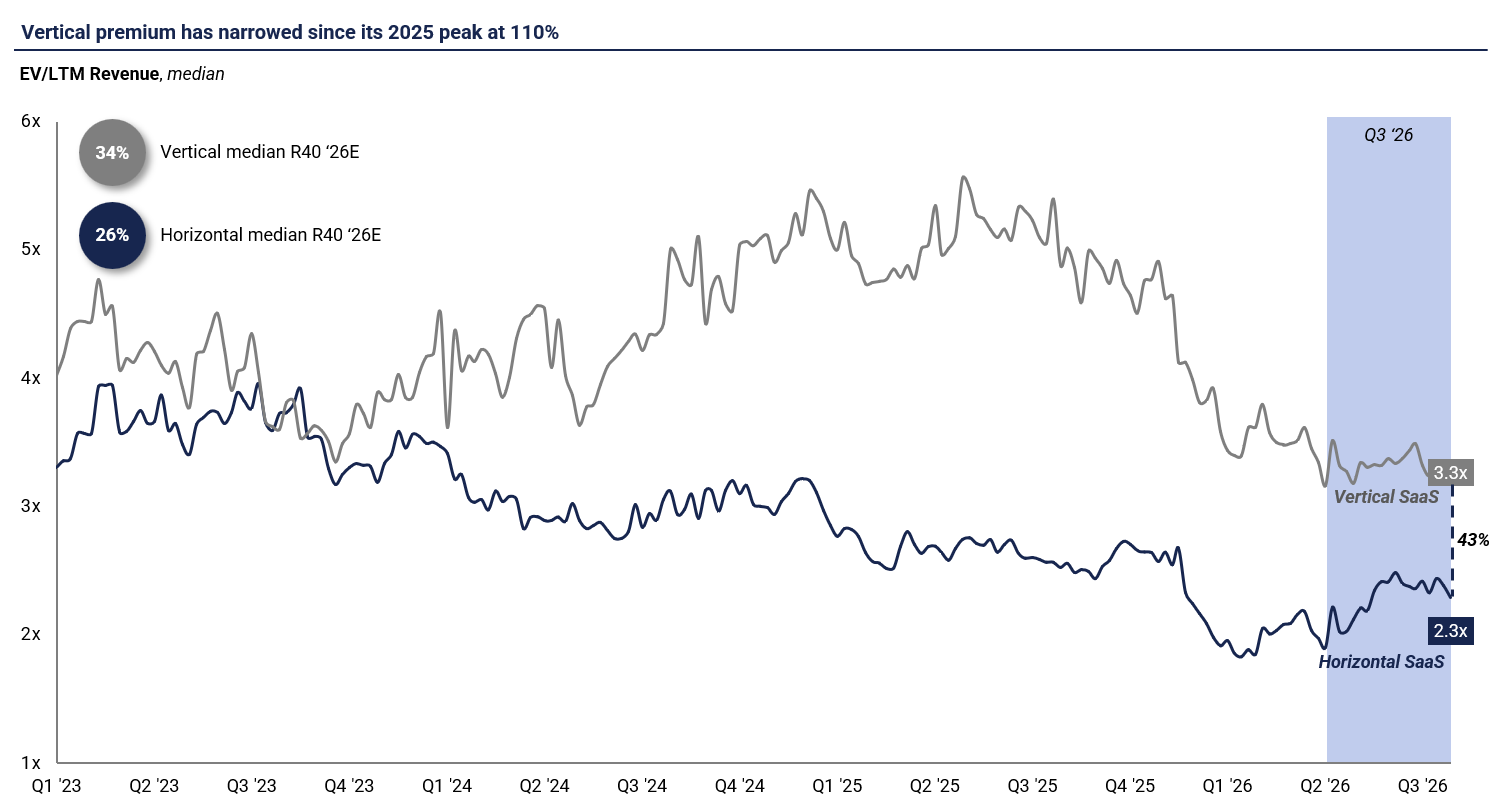
The vertical SaaS valuation premium narrowed further, driven primarily by a re-rating of horizontal SaaS: Vertical SaaS companies continued to command a premium over their horizontal peers, trading at 3.3x versus 2.3x EV/LTM revenue, representing a 43% premium. However, the valuation gap narrowed during the quarter as horizontal SaaS multiples expanded, while vertical SaaS valuations remained broadly unchanged from Q2 ‘25 levels. This convergence occurred despite vertical SaaS companies demonstrating materially stronger fundamentals, with a median 2026E Rule of 40 of 34%, compared with 26% for horizontal SaaS.
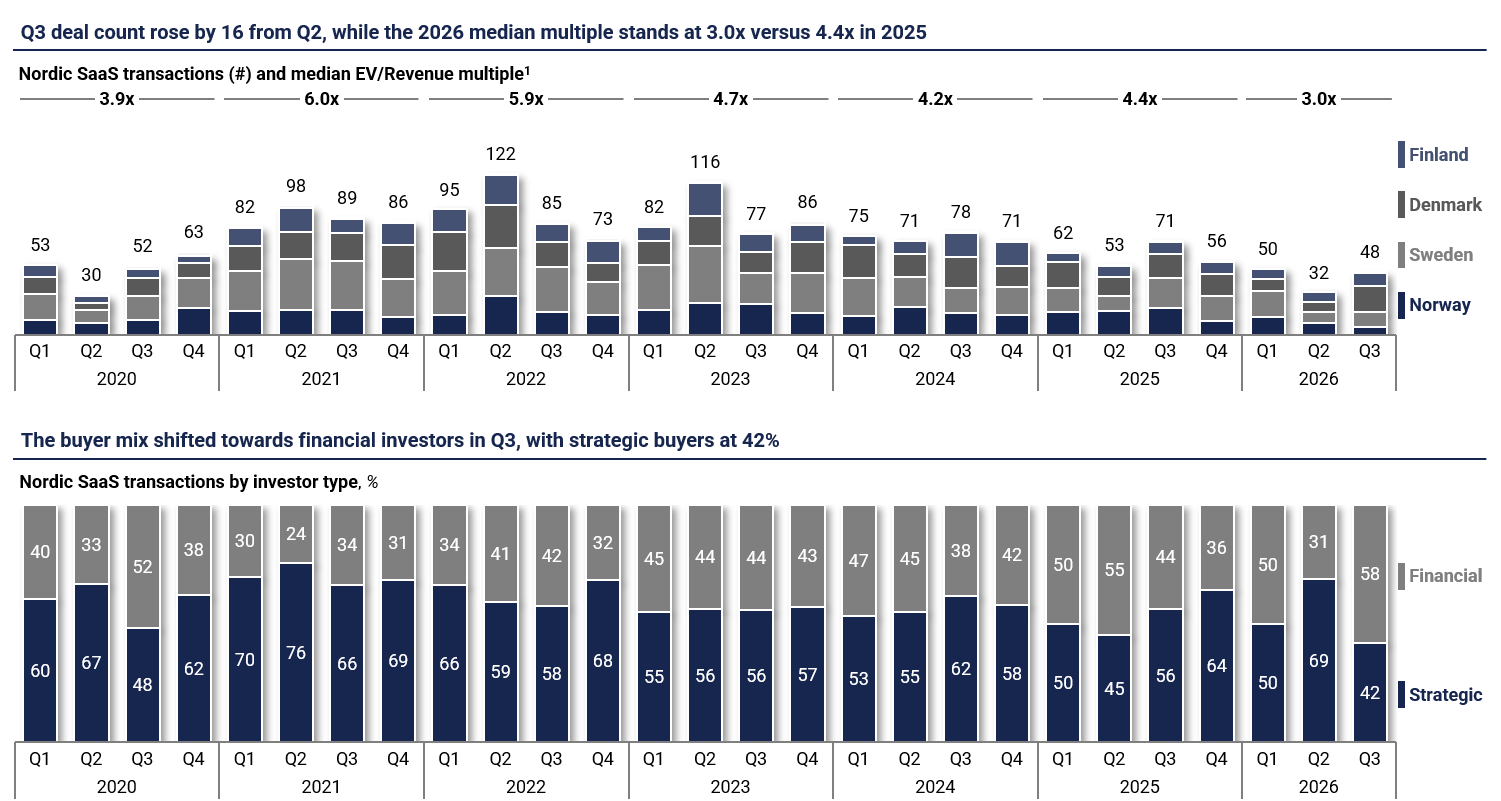
Nordic SaaS M&A activity rebounded from the previous quarter, driven by a revival in financial sponsor activity: A total of 48 Nordic SaaS transactions were completed in Q3 2026, although overall deal volumes remained subdued compared with the corresponding quarters in previous years. The evolving AI disruption narrative, alongside uncertainty surrounding long-term competitive moats and pricing power, continued to weigh on transaction activity. Median transaction multiples declined to 3.0x EV/Revenue in YTD 2026, down from 4.4x in FY2025. Following a quieter Q2, financial sponsors returned, accounting for 58% of all SaaS transactions during the quarter.
Specialist software investors, including Main Capital Partners, Monterro and Verdane, were among the most active buyers, each completing one or more transactions. From our vantage point, the M&A landscape remains highly bifurcated: high-quality assets with defensible data, context or regulatory moats and a track record of consistent performance continue to command high single-digit revenue multiples, while businesses with more average fundamentals increasingly struggle to attract buyer interest and gain traction in exit or fundraising processes.
Download our SaaS valuation insights report
In our quarterly SaaS valuation insights report, we strive to provide an overview of the latest developments and trends related to valuations accompanied with our proprietary insights and learnings from live projects and observations from engaging with both clients, strategic buyers, and investors in our cross-border advisory practice.
The full SaaS valuation insights report can be downloaded by clicking the link below, and the report will also be published on our website on a quarterly basis.
Ruben Moring, Partner at Translink Corporate Finance
Juuso Marttinen, Partner at Translink Corporate Finance
Max Fodstad, Analyst at Translink Corporate Finance
